
Criminal are using Execution as Intimidation: The Deadly Price of Being Honest in South Africa…
- Dec 7, 2025
- 4 min read
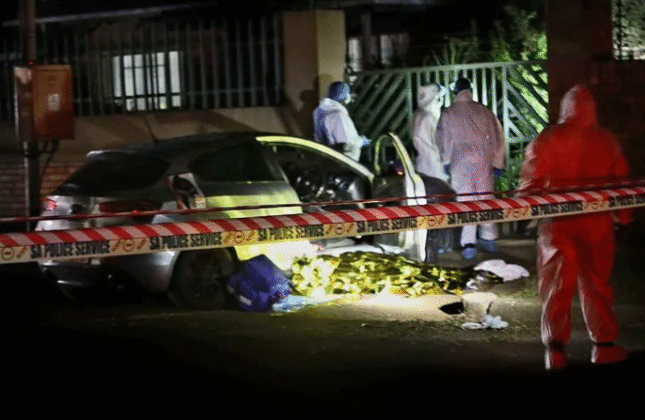
The brutal shooting of Witness D outside his home, reportedly in front of his partner and children, is not an isolated horror; it is the latest tragic punctuation in a wider pattern that turns those who dare to expose wrongdoing into targets. Whether labelled whistleblowers, witnesses, investigators or anti‑corruption activists, those who lift the veil on malfeasance in South Africa increasingly face assassination-style killings that do more than silence one voice: they send a chill through every potential truth‑teller.
Scale and context
South Africa’s high violent‑crime environment provides fertile ground for such intimidation. Homicide rates, pervasive organised‑crime networks, corrupt elements within state institutions and weak or compromised protective mechanisms create a lethal combination. When whistleblowers are killed with impunity, the effect is systemic: corruption is emboldened, investigation collapses, victims lose faith in the rule of law, and social trust frays.
Verified cases that underscore the threat
A rigorous, fully sourced catalogue of assassinations targeting whistleblowers requires detailed investigation. Even so, several well‑documented cases over the past decade illustrate the pattern and the stakes:
- Madlanga Commission's Witness D (November 2025): In November, Marius van der Merwe — testifying as Witness D before the Madlanga Commission — exposed deep rot in the Ekurhuleni Metro Police and the private security sector, implicating suspended EMPD Deputy Chief Julius Mkhwanazi in a murder and alleging he had been forced to dump the body of a suspect killed by rogue EMPD officers. Van der Merwe, a former police reservist and well‑known East Rand security operator who had led fights against illegal mining, told the commission he was on a mission to expose state officials involved in illicit mining; eNCA reports he spoke about that mission just hours before he was shot dead outside his home. Sources say those he implicated in corrupt law‑enforcement and private‑security circles were angry at his testimony.
- Babita Deokaran (August 2021): A senior finance official in Gauteng’s health department, Deokaran had contributed to investigations into procurement corruption. She was shot dead outside her home in what was widely condemned as a targeted hit that underlined the danger faced by officials who expose irregularities.
- Sikhosiphi “Bazooka” Radebe (March 2016): An anti‑mining activist and leader of community resistance to mining on Wild Coast lands, Radebe was gunned down in an attack widely believed to be linked to his activism and opposition to powerful economic interests. His murder sent shockwaves through communities defending land rights.
- Detective Sergeant Charl Kinnear (September 2020): A Western Cape police detective investigating organised crime and corruption, Kinnear was assassinated outside his home. His death exposed vulnerabilities in the protection of law‑enforcement officers who lead high‑risk probes and sparked questions about insider collusion and corruption.
- The broader category — witnesses in high‑profile probes and commissions: Over recent years, multiple witnesses and low‑profile whistleblowers connected to major corruption investigations have been threatened, assaulted or killed. These incidents, documented in media reports and court records, point to a sustained tactic of silencing through violence across cases involving procurement fraud, land and resource disputes, and organised criminal activity.
Common threads
These killings share features: execution‑style methodology; proximity to the victim’s home; deliberate targeting following cooperation with investigations or vocal opposition to entrenched interests; and frequent delays or shortcomings in bringing perpetrators and organisers to justice. Often, family members and communities are traumatized and reluctant to come forward or continue cooperation.
Consequences
The implications are profound:
- Investigations stall or collapse as witnesses recant or disappear.
- Corrupt networks operate with impunity, increasing state capture risk.
- Public confidence in justice institutions erodes.
- A culture of fear deters civic activism and whistleblowing, a direct blow to transparency and democracy.
A call to conscience
South Africa cannot accept a future where the courage to speak truth to power becomes a death sentence. Each whistleblower murdered is not merely an individual loss but a wound to the public interest and to democracy — a deliberate act that corrodes trust, freezes investigations and normalises impunity. When those who expose malfeasance are hunted down, entire systems of accountability are intimidated into silence and citizens are robbed of hope that the state will protect the vulnerable and punish the powerful. The murder of Witness D is both tragedy and warning: without decisive action the pattern will repeat, and our democracy will be further degraded.
What must be done — a clear, urgent roadmap
- Immediate strengthening of witness‑protection: fund and expand an independent, professionally run witness‑protection agency able to offer relocation, anonymity, psychological support and long‑term security for witnesses, whistleblowers and their families.
- Fast, transparent, insulated investigations: establish specialised, independent task teams to investigate killings of whistleblowers and public‑interest probes, insulated from local conflicts of interest and subject to regular public reporting.
- Prosecute organisers and financiers, not only triggermen: pursue the networks and patrons who order hits through aggressive intelligence‑led investigations and asset‑forfeiture measures.
- Police reform and accountability: root out corrupt elements through vetting, prosecutions, disciplinary systems and professionalisation; ensure oversight bodies have teeth and rapid response capacity.
- Legal protection and incentives for whistleblowers: strengthen whistleblower legislation, guarantee confidentiality, provide legal aid and, where appropriate, financial protection or reward for information that leads to convictions.
- Protect journalists and civil‑society actors: implement emergency protection measures, rapid‑response security protocols and legal safeguards for those reporting on corruption and organised crime.
- Improve interagency and international cooperation: coordinate police, prosecution, intelligence and anti‑corruption agencies domestically and with foreign partners to tackle transnational criminal networks and money‑laundering routes.
- Target impunity through asset tracing and recovery: prioritise tracing, freezing and forfeiture of illicit proceeds to dismantle the economic incentives for violence and corruption.
- Community engagement and witness support: invest in community policing, victim‑support services and public campaigns that destigmatise whistleblowing and encourage cooperation with authorities.
- Political leadership and transparency: demand public, sustained political commitment to protect truth‑tellers, backed by measurable targets, independent oversight and consequences for failure.
Conclusion
The choice is stark: tolerate a climate where exposing crime equals a death sentence, or marshal the full power of the state, civil society and international partners to protect truth‑tellers, dismantle criminal networks and restore faith in justice. If South Africa truly values democracy and the rule of law, it must act now — boldly, transparently and without fear — to end impunity and ensure that speaking out is a civic duty, not a mortal risk.


Comments